Understanding Eating Differences, Difficulties & Disorders
At the Flourish Collective, we recognise that eating is a deeply personal, emotional and relational experience. It’s shaped by our bodies, our brains, our cultures and our lived experiences.
There is no one “right” way to eat - we embrace diversity of food choices and experiences. That’s why we offer dietetic support across the spectrum: from eating differences, to difficulties, to clinical disorders.

·
Growth Through Connection
· Growth Through Connection
How we Understand & Support Each Experience
-
Respecting individuality and neurodiversity
Eating differences are unique patterns or preferences that might not align with mainstream ideas of “typical” eating - but they’re not inherently harmful or disordered.
These can include:
Strong sensory preferences or aversions (e.g. textures, smells)
Cultural or religious food practices
Neurodivergent eating styles (common in autism or ADHD)
Ethical food choices (e.g. veganism)
These differences often reflect a person’s identity, values, or neurotype - and most often do not require change, just understanding and support.
-
When food becomes frustrating, stressful or emotionally charged
Eating difficulties involve challenges with eating that cause distress or interfere with daily life but may not meet the criteria for an eating disorder.
They can look like:
Struggling to eat enough, consistently
Avoidance of certain foods or food groups
Difficulty recognising hunger or fullness
Food anxiety or fear of judgement when eating socially
Sensory overload at mealtimes
These difficulties may be connected to mental health, trauma, neurodivergence, chronic illness, disability, or life transitions - and they deserve compassionate, personalised support.
-
Serious, diagnosable conditions that deserve specialised care
Eating disorders are complex mental health conditions involving distressing patterns of eating, body image and self-worth.
These include:
Anorexia Nervosa
Bulimia Nervosa
Binge Eating Disorder
Avoidant/Restrictive Food Intake Disorder (ARFID)
Other Specified Feeding or Eating Disorder (OSFED)
They can affect anyone, regardless of size, gender, age or background, and often require a collaborative, trauma-informed, multidisciplinary approach. At Flourish, we believe in a collaborative mental health, dietetic and medical support and seek to provide this in a way that feels the most meaningful to you and your family.
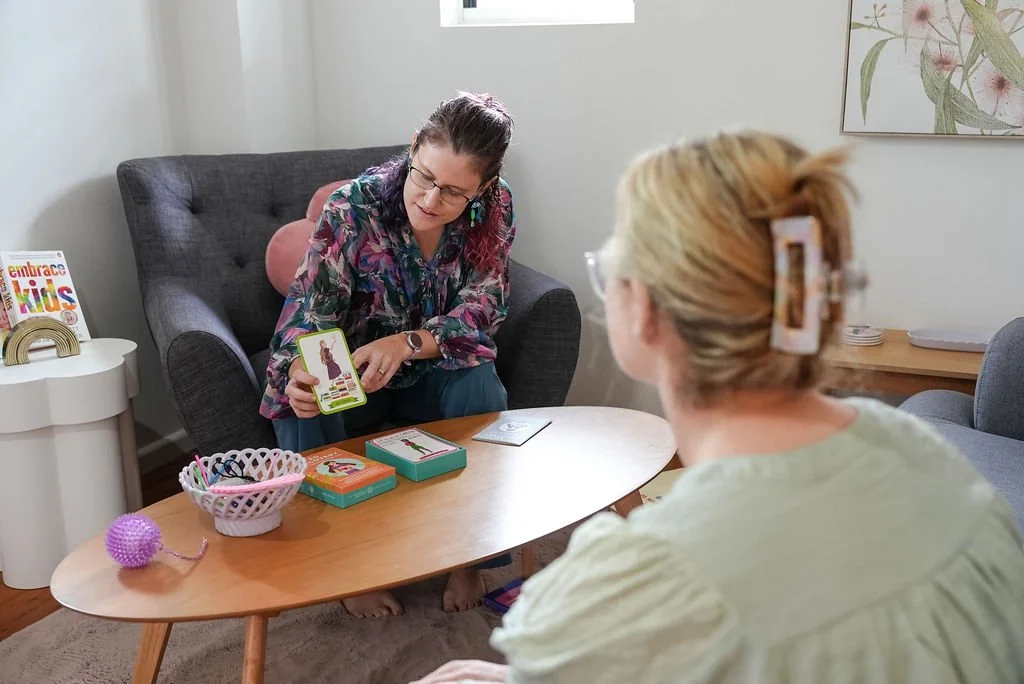
Our Approach: Food Peace & Body Trust
Our team is committed to providing affirming approach to eating related difficulties and disorders.
Whilst we are trained in the gold standards of treatments aligned with current research, we are well versed in adapting supports to suit individual needs and in particular lived experiences knowledges of eating disorders care for neurodivergent people of all ages.
Our approach includes:
Family-Based Therapy (FBT)
Cognitive Behavioural Therapy – Enhanced (CBT-E)
Schema Therapy
Nutrition supports tailored to your needs
Affirming adaptations to therapy (e.g. autonomy-based exploration rather than rigid food exposures)
Recognition of the cognitive, relational, regulation, and sensory factors underlying eating challenges
Ongoing collaborative care
Our mental health clinician and dietician work collaboratively with you to offer supports that feel right for you and your family.